Code Indexing
Know the question. Find the code.
You do not always know the right filename or symbol. A semantic index helps the agent find relevant code before reading the source and making a change.
Indexing uses the project setup and backend embedding service. Availability depends on the index state and the account’s available services.
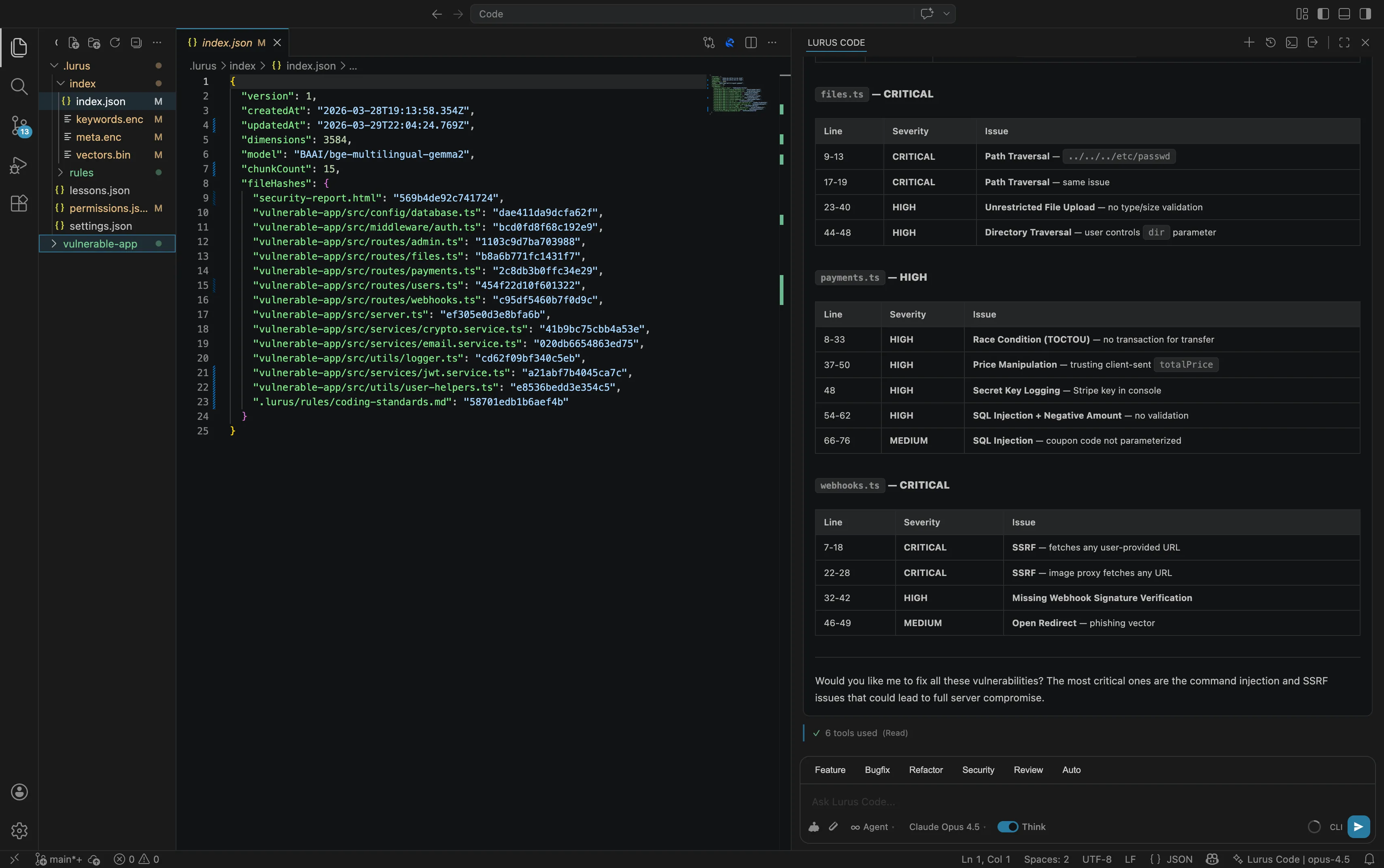
Search by meaning. Verify in the source.


- 01
Ask about behaviour.
Start with what the code does, even when you do not know the implementation name.
- 02
Find relevant locations.
The index narrows the source areas to inspect. It supports context retrieval; it does not replace reading the current files.
- 03
Read before changing.
The agent checks the relevant source and follows project boundaries before working on the task.
Index lifecycle
Built in the background. Updated with the work.
A saved index can be loaded while a background refresh runs. Changed paths trigger updates. Index status distinguishes availability, progress and temporary limits on semantic search.
Control the index deliberately.
/indexing shows status. Turning indexing off disables its use; clearing the local index is a separate action. A rebuild requires indexing to be enabled.
- Inspect indexing status
/indexing - Enable project indexing
/indexing on - Disable project indexing
/indexing off
How index data is processed.
Semantic search sends code chunks and project identifiers to the backend embedding service. The resulting index is stored locally. ZDR concerns model processing; use /indexing clear to delete the local index separately.
Your code stays yours.
Source code and request context are processed with Zero Data Retention. No use for model training. Providers and processing regions are disclosed transparently.
See privacy and processing detailsA few things to know before you start.
Is indexing fully local?
Does turning indexing off delete the index?
Does the index replace reading files?
Code Indexing
Start with a question, not a filename.
Check the index state, then ask about a real behaviour in your project. Read the matched source before making a decision.
Indexing uses the project setup and backend embedding service. Availability depends on the index state and the account’s available services.
Want to start with your team? Talk to us.