
02 / In the terminal too
The same flow. No mouse required.
Start Lurus in your project directory. Research, plan or implement directly in the terminal and use your existing development tools for verification.
Explore the workflow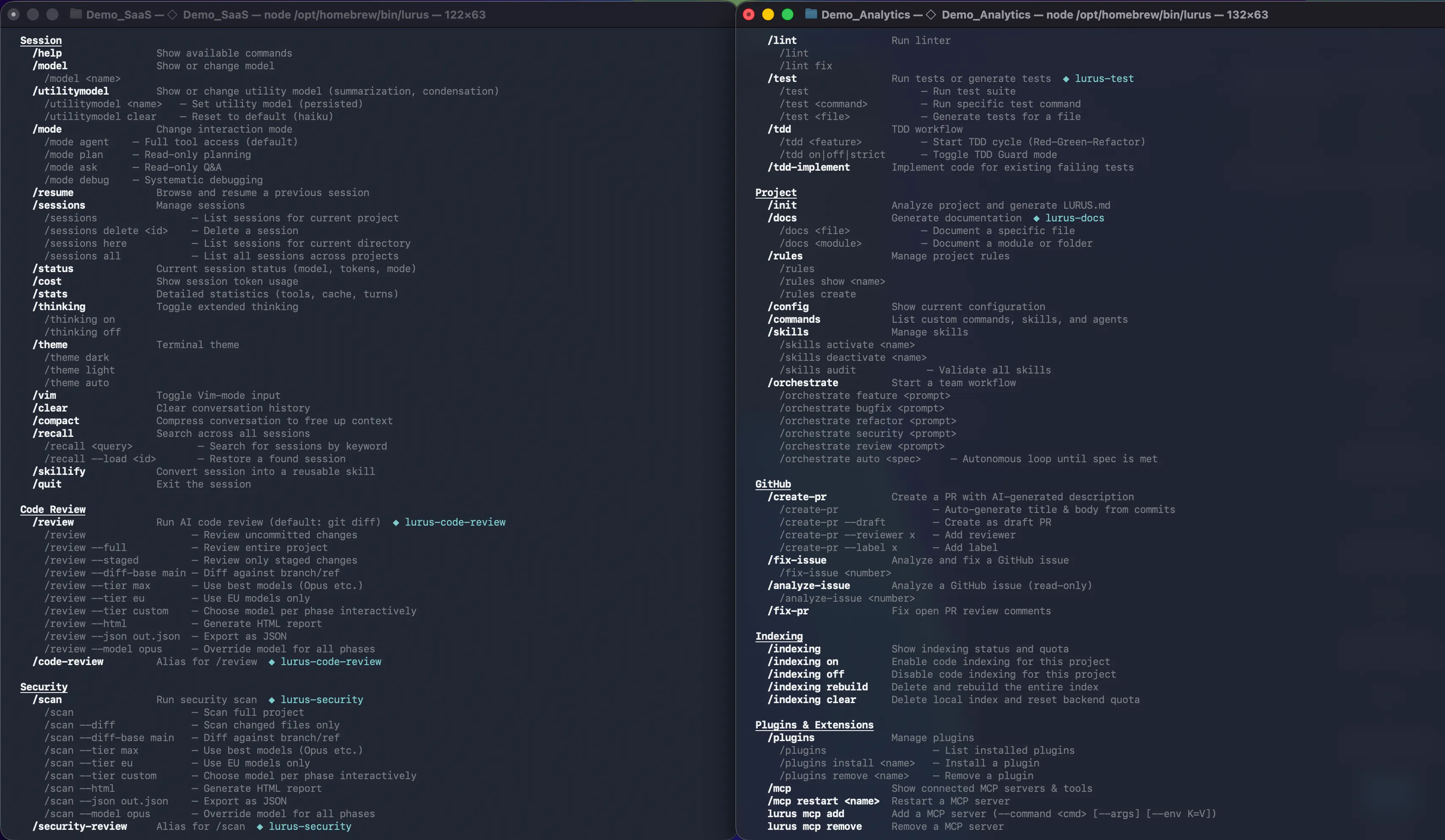
Your code is never stored. GDPR-compliant processing with immediate data deletion.
View our security standardsLurus Code vs Codex
Lurus brings agentic coding to your VS Code and terminal workflow. Use multiple model providers, work from context to review, and manage team consumption without an extra seat base fee.
One free week for Pro, Pro+ and Ultra. Paid subscription afterwards unless you cancel beforehand. Usage and features depend on your plan and credit.
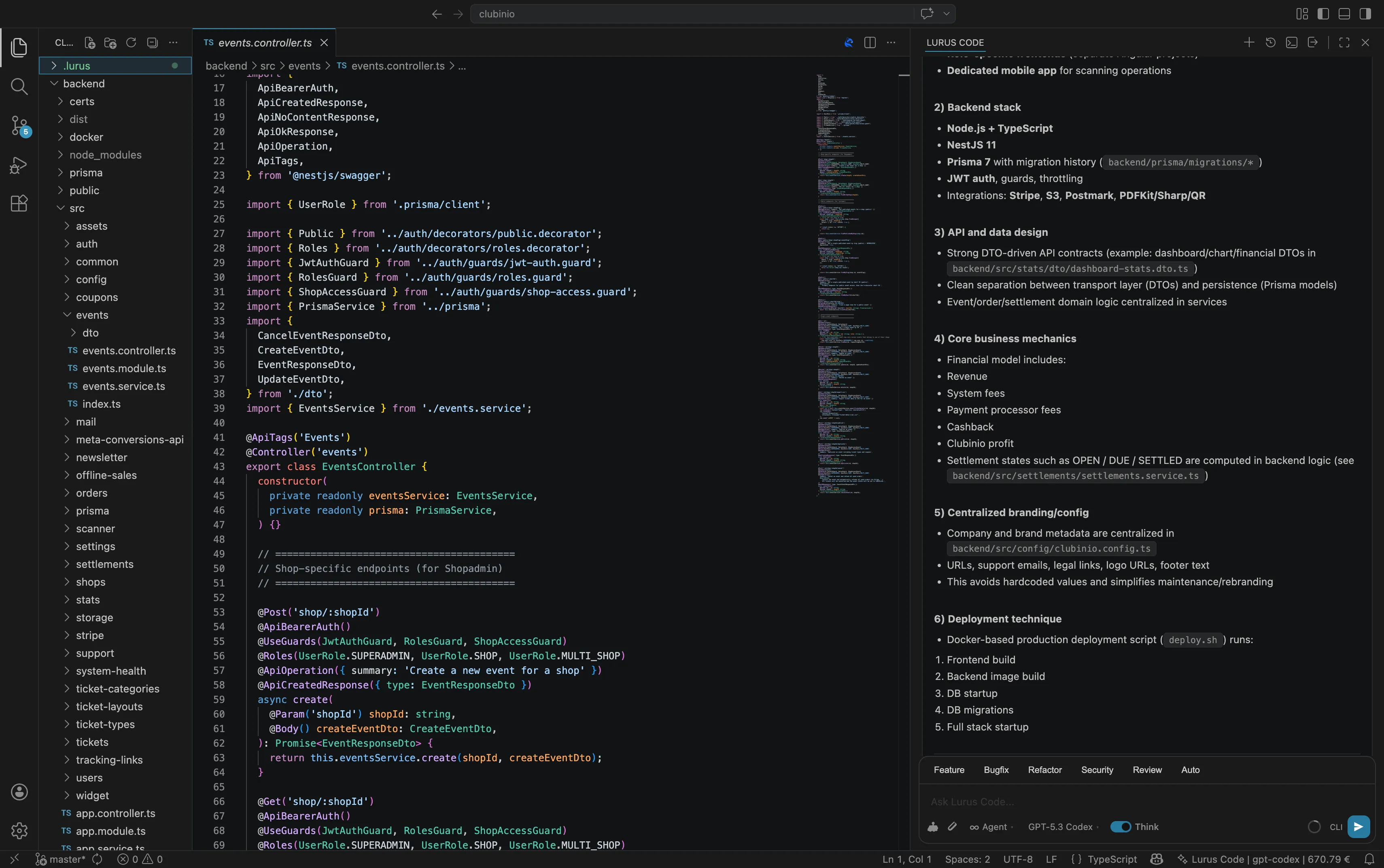
Codex offers local IDE/CLI work and cloud delegation in the OpenAI ecosystem. Lurus is the alternative for a provider-spanning workflow with a German contracting party and documented data paths.
Your task. Your surface.
Codex connects local work and cloud delegation. Here, Lurus focuses on a VS Code/CLI workflow with multiple model providers and documented data paths.
Explore the CLI workflowFiles, context and agentic work side by side.
Start Lurus right from your project directory.
Choose providers from the catalog. Context is transmitted for AI processing.
Not just answers. Work on your project.
Lurus connects context, planning, changes and verification in your development workflow. You set the direction and review the result.
Choose a view or bring the back image forward.
02 / In the terminal too
Start Lurus in your project directory. Research, plan or implement directly in the terminal and use your existing development tools for verification.
Explore the workflow 03 / Before the merge
Inspect changes with the code review workflow. Use findings as a starting point for improvements and review the final diff yourself – an agent does not replace approval.
Explore the workflow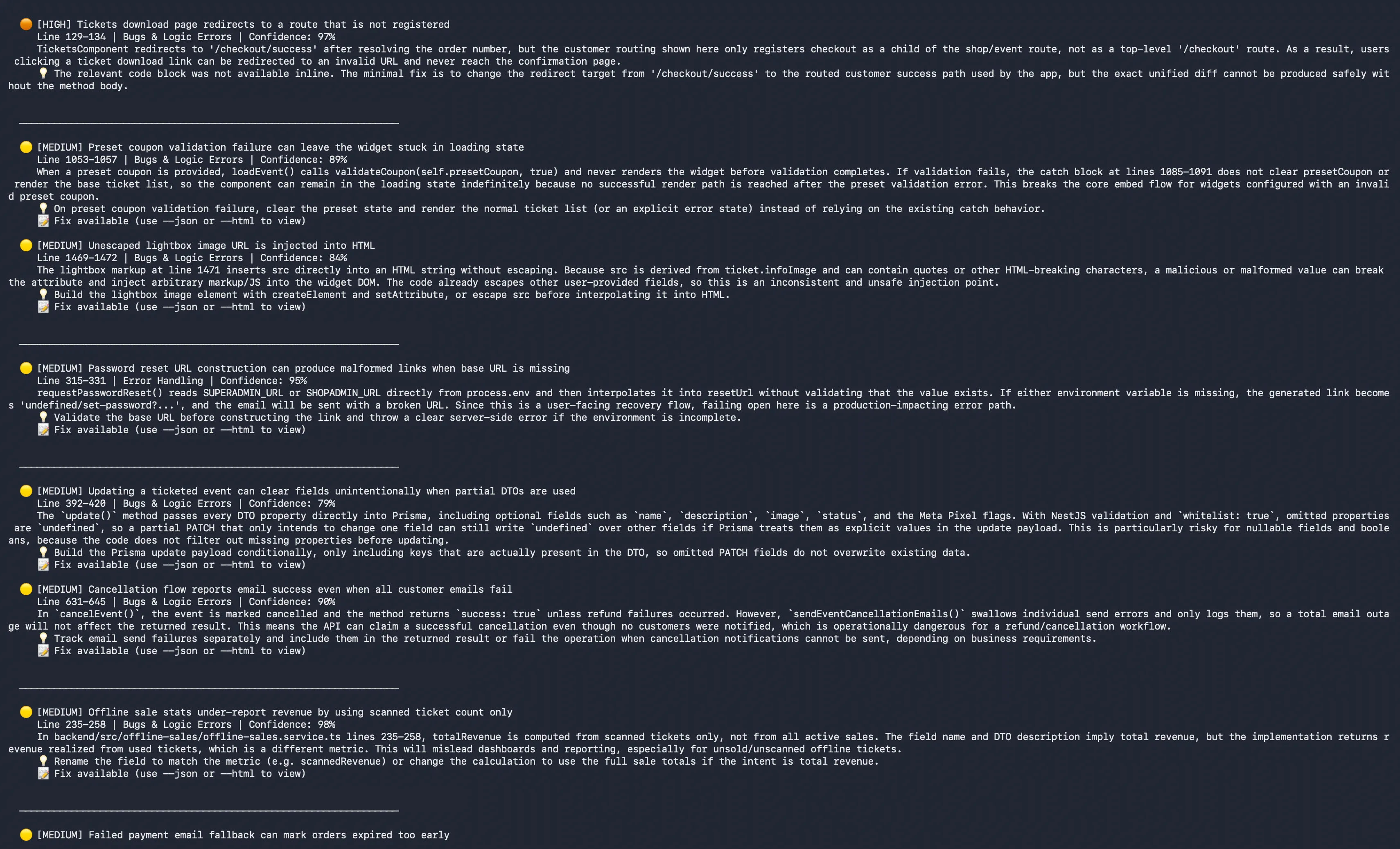
Product captures show example projects. Features depend on your plan. Multi-agent orchestration requires Ultra and available credit; tests and human review remain necessary.
The right alternative for you
Lurus Code
Codex
The direct comparison
No benchmark and no winner scoring. This compares documented product approaches; availability and limits may vary by plan, model and surface.
Work together. Keep usage intentional.
No seat or team base fee on the Team model. You pay for actual model and AI feature usage from a shared balance. Admins manage monthly member budgets and model access.
Lurus pricing and terms€0 does not mean free AI usage. Individual plans have their own subscriptions and limits. Converting an account to Team is permanent; it cannot return to individual plans.
Codex
Codex access may be included in ChatGPT plans; limits, additional credits and API billing differ by account and access path. An included subscription does not mean unlimited agent usage.
Current provider pricingYour code stays yours
Lurus documents Zero Data Retention for source code and request context, and no model training. The contracting party is in Germany. Processing regions are disclosed per model route – not every route is EU-only.
Codex
OpenAI documents no training on Business/Enterprise/API data by default. Storage and data controls differ across local workflows, cloud tasks and API use. Review the terms of the access path you actually use.
Read the provider documentationNo. Codex offers local CLI and IDE work as well as optional cloud delegation. A fair comparison evaluates the specific workflow, model choice and your cost/data requirements rather than reducing Codex to one surface.
Lurus offers models from different providers in one workflow. Selection and cost depend on the current catalog, your plan and available credit. Team admins can restrict allowed models. Cursor, Copilot, Windsurf and Cline also offer multiple models – that alone is not a unique advantage.
Not generally. Pro, Pro+ and Ultra offer a one-week trial followed by a paid subscription unless you cancel in time. The Team model has no seat or team base fee; actual AI usage is paid from the shared balance. Conversion to Team is permanent.
Not exclusively: the context needed for AI processing is transmitted. Lurus documents Zero Data Retention and no model training for this data. Providers and processing regions are disclosed per route. Review the Security page, privacy policy and DPA for the precise scope.
No. AI agents can make mistakes. Inspect changes, run appropriate tests and retain your review and approval processes. This comparison does not claim measured superiority in speed or code quality.
Checkable, not sweeping
An editorial comparison by Lurus Code using official provider sources. Not an independent performance test. Prices, names, features and privacy terms may change; the linked provider information is authoritative.
Sources reviewed on:
Take a real task from your project. Let Lurus work on it. Evaluate the diff, the tests and your workflow – not just a promise.
One free week for Pro, Pro+ and Ultra. Paid subscription afterwards unless you cancel beforehand. Usage and features depend on your plan and credit.
Lura is the language model adapted by Lurus for coding tasks. It uses separate Lura credits provided in addition to your regular model credits.